
UPSC Indian Economic Service (IES): Complete Preparation Strategy, Syllabus & Resources
The UPSC Indian Economic Service (IES) examination is one of the most prestigious and competitive exams conducted in India. It is designed for aspirants who aim to work at the highest levels of economic policy-making, research, planning, and governance in India. Due to its analytical depth and advanced syllabus, UPSC IES demands a structured preparation strategy, strong conceptual clarity, and consistent practice.
Why UPSC IES Is a Unique Examination
Unlike many other competitive examinations, UPSC IES focuses extensively on Economics and Statistics at an advanced level. Candidates are assessed not only on theoretical understanding but also on their ability to apply economic concepts to real-world policy issues. This makes expert guidance, quality study material, and exam-oriented preparation essential for success.
UPSC IES Syllabus Overview
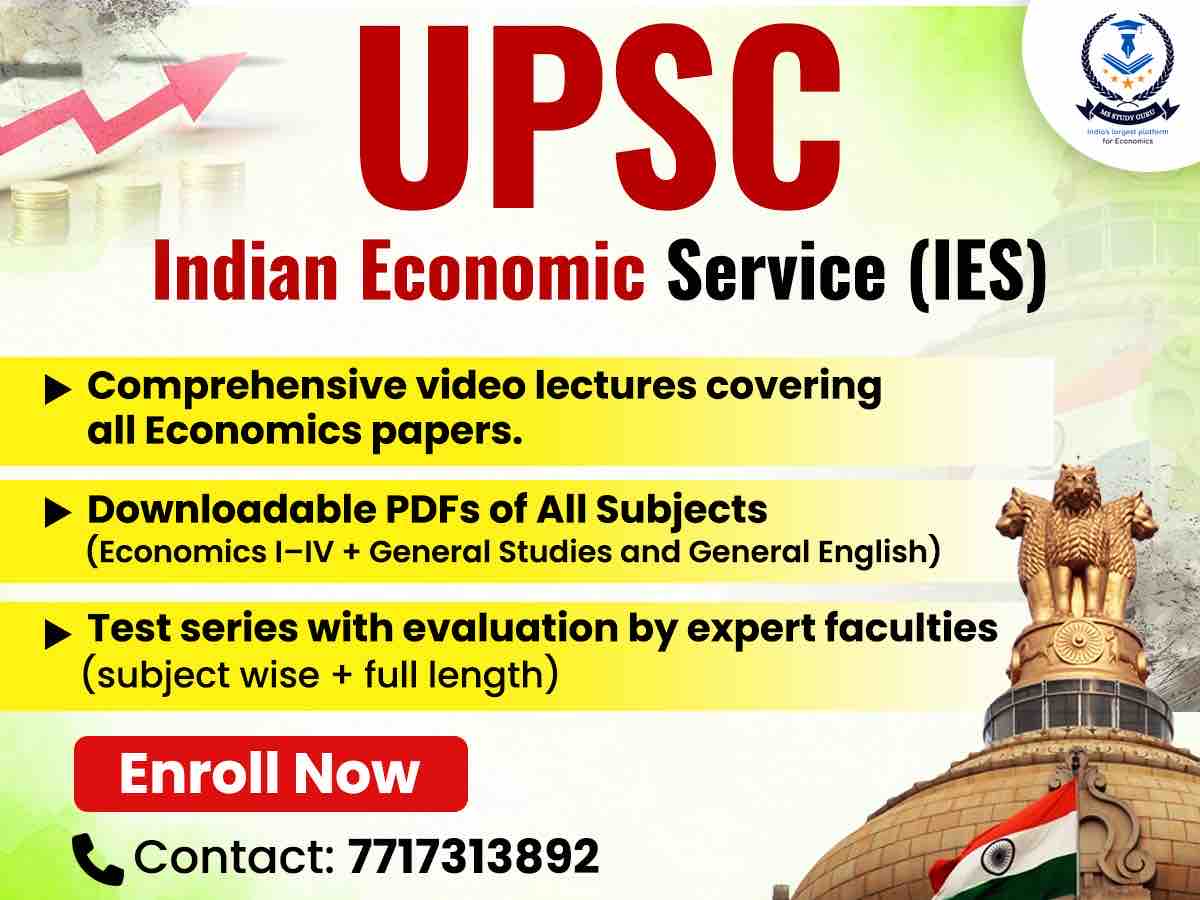
The UPSC IES syllabus is comprehensive and includes the following major areas:
- Microeconomics and Macroeconomics
- General Economics
- Indian Economy
- Statistics and Econometrics
- Applied Economic Analysis
Each subject requires conceptual depth, numerical accuracy, and the ability to present well-structured analytical answers in the examination.
Importance of Video Lectures in IES Preparation
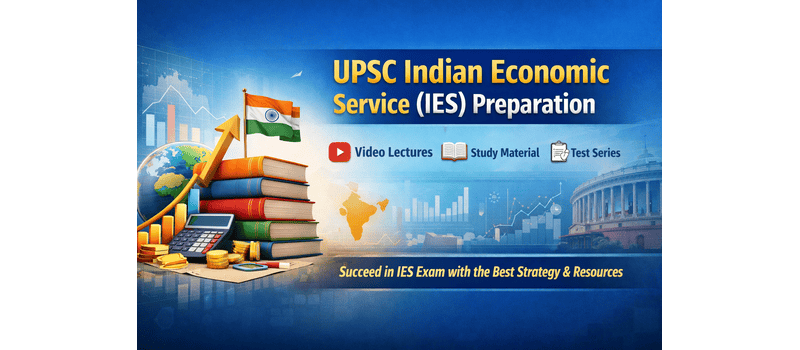
Expert-led video lectures help aspirants understand complex economic theories, mathematical models, and statistical tools in a clear and structured manner. Video-based learning also offers flexibility, allowing candidates to revise difficult topics multiple times and learn at their own pace.
Role of Study Material and Previous Year Questions
Comprehensive UPSC IES study material ensures complete syllabus coverage with the right exam-oriented depth. When combined with systematic analysis of previous year question papers (PYQs), aspirants gain insights into recurring topics, answer expectations, and the overall pattern of the examination.
Why a Test Series Is Essential
A structured UPSC IES test series plays a critical role in preparation by simulating the real exam environment. Regular testing improves time management, answer writing skills, and conceptual application. Detailed performance analysis helps aspirants identify weaknesses and focus on improvement.
Conclusion
Cracking the UPSC Indian Economic Service (IES) examination requires a balanced combination of conceptual clarity, disciplined preparation, and continuous practice. A well-designed course that integrates expert video lectures, updated study material, and a comprehensive test series provides aspirants with the right ecosystem to achieve a top rank in the UPSC IES examination.



Comments (0)